Pages

Friday, February 15, 2013

Stoking the Furnace of the War Machine

Since World War ii, building up large-scale defense companies has been taboo in Germany. But that taboo is now largely history.
Two of Germany’s top military manufacturers—Rheinmetall and man Group—have announced their intention to merge their military vehicle production. The resulting combine will produce a new national champion and leading supplier for wheeled military vehicles in Europe.

This amalgamation, which has been in the works for a year, has been pushed by the political class. The German government is a big supporter of bulking up German military industry. MarketWatch columnist David Marsh said it “has been providing behind-the-scenes assistance to make sure industry goes in the right direction.” The new combine “meets the long-held German desire to build industrial companies with world scale in the defense field” (January 18).
Read More »

Sunday, May 20, 2012

Germany Worries About Its Gold Reserves

Philipp Missfelder, member of Germany’s Christian Democratic Union, tried to inspect German gold reserves stored in New York, but was not given access. (Getty Images)
Philipp Missfelder, member of Germany’s Christian Democratic Union, tried to inspect German gold reserves stored in New York, but was not given access.
(Getty Images) 
German politicians and accounting bodies want more guarantees concerning the security of Germany’s gold reserves, with Germany’s federal audit office due to report to the finance committee of the German Parliament on the matter.

Read More »

Germany’s Gold Hoard by Ron Fraser and Andrew Miller

Germany’s gold reserves may prove a powerful weapon in the troubled world economy. (Thomas Coex/AFP/Getty Images )
Germany’s gold reserves may prove a powerful weapon in the troubled world economy.
(Thomas Coex/AFP/Getty Images)
Gold skyrocketed to over us$1,800 an ounce on Tuesday. One nation gained powerfully as a result: Germany.
As the markets fixate on Europe, seeking to understand the complexities involved in Franco-German moves to stabilize the eurozone and hence the global economy, little attention has been paid to a crucial component of German power in this whole equation—Germany’s gold hoard.
Read More »

Saturday, May 19, 2012

Did the Holy Roman Empire Plan the Greek Crisis? by Gerald Flurry

The Greek riots are a sign of a far greater upheaval that is threatening to engulf much of Europe.
(Aris Messinis/AFP/Getty Images)

I’d like to add my thoughts to a critical article written by Richard Palmer, titled “Who Will Stop the Greece Fires?” It was placed on our website Dec. 16, 2008.
Read More »

Friday, May 18, 2012

Italy Calls in the Army to Protect Tax Collectors


Italy’s Interior Minister Anna Maria Cancellieri announced May 13 that Equitalia, the private company that collects taxes, and Finmeccanica, an aerospace and defense conglomerate, may receive military protection after they were attacked by anarchists.
Cancellieri warned that the army may also need to protect Italy’s high-speed rail network. 
Read More »

Somewhere In Nigeria by Faith Abiodun


Twitter. Trends. Nigeria

#somewhereinNigeria

In one sudden flash, young Nigerians have taken to Twitter like an army of vultures on post-World War II Japan. The last couple of months have witnessed such an influx of opinion makers and shameless attention-seekers to the Twittersphere, that one wouldn’t be surprised if the elderly ones start to challenge the younger ones thus: “Don’t you know I started using Twitter before you?” A daily dose of Twittercetamol always leaves one energized with entertaining contributions from ALIBABAGCFR, Denrele Edun, Don Jazzy, Eggheader, Ogundamisi, Tolu Ogunlesi, Chinedu Ekeke, MrFixNigeria and several others. No day is complete without the endless list of people begging D’banj and Darey for a retweet; no day is complete without ALIBABA’s knock-knock jokes; no day is complete without MrFixNigeria making new enemies with occasional provocative tweets, and you can trust Chinedu Ekeke and co to take him to the cleaners within seconds. Twitter is always fun, but today things are getting serious.
Read More »

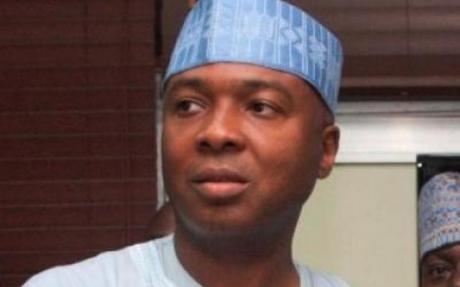
Omojuwa interviews Senator Bukola Saraki


Senator Bukola Saraki spoke to Omojuwa.com’s Japh and Fiyinfoluwa Elegbede. We spoke on issues ranging from his current travails with the police, the Senate and it’s allowances, the competence (or otherwise of president Jonathan), his tenure as Kwara State Governor and the issues around the N21 billion loan saga amongst others.

Read More »

Saturday, May 12, 2012

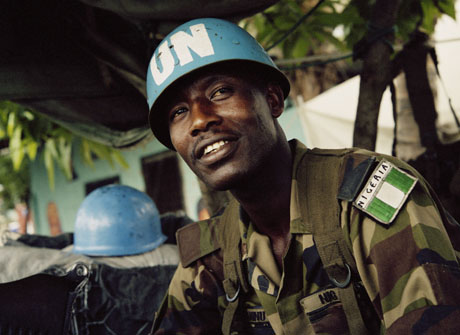
Still on Failing State & Fading Peacekeepers by Nasir El-Rufai

Last week’s column on our nation’s peacekeeping failures ruffled more than a few feathers both within the defence establishment and corridors of executive power. That was expected, because when those wasting our resources in the name of our defence become exposed in the way our peacekeeping capacity has rapidly deteriorated, all kinds of motives will be imputed to divert attention from the wanton looting of the defence and security budgets going on between the presidency and the agencies concerned.
Read More »

Between Terrorism and Corruption – Implications For Nigeria : Paper Presented by Nasir El-Rufai

Between Terrorism and Corruption – Implications for Nigeria
(Draft for Discussion)
Nasir Ahmad El-Rufai
Protocols
Introduction
I am pleased to be with the Silver Knights this afternoon to share my thoughts about two issues that confront our nation – terrorism and corruption. As a well-known opposition figure, I want to state clearly that the views expressed here are mine, and not of the political party I belong to – the Congress for Progressive Change. Secondly, my opinions are based on my interpretation of facts on the ground and research done by others, and not driven by politics.
Read More »

To Your Tents, O Nigerians! By Faith Abiodun

Why is everyone tired of Nigeria? Rather, why shouldn’t they be tired of Nigeria? 


It was about 8:30am and I needed to make a quick stop on my 4-hour drive from Syracuse to the United Nations headquarters in New York City. I pulled over at the closest gas station somewhere around Philadelphia and went into the store to conduct quick business. Ten minutes later, I emerged with my breakfast and set about resuming my trip, but wait, I needed to grab an extra bottle of water. I went back into the store and returned with a bottle but noticed someone tailing me as I exited. I swung around and came face to face with a young man who was smiling intently at me. Wait a minute, what’s this about?

Read More »

Musings From 35,000 Feet By Faith Abiodun

I’m sitting precariously at 35,000 feet above the earth, on a Delta Airlines flight from Atlanta, Georgia to Syracuse, New York; thinking back on the activities of the weekend. I was at an event in Columbia, South Carolina on Saturday where former US President, Bill Clinton was guest speaker. I’ve always been fascinated by the Clintons, and it’s barely three weeks since I was listening to Hillary talk about the role of young people in building a better world. Hillary spoke directly to me on Monday April 23, 2012 when she said “Be skeptical, but don’t be cynical”. She was talking about why young people need to be engaged with
Read More »

Rashidi Yekini Was Murdered By Segun Odegbami

This is one of the most difficult articles I have ever written.

I now believe that the universe sought me out some months ago for an assignment, to bear witness and to testify in the unfolding events surrounding the life and death of Rashidi Yekini! But why me?
Within the football circle I believe I am one of a very few persons that Rashidi Yekini was comfortable with. Secondly, in the past three months I have had the closest interaction with the man up till the time I received the shocking information that he had died. I could not relate the news with the circumstances of his life during this period. Some things simply did not fit the picture being painted. And someone needed to testify, clarify and debunk the ugly and false stories being peddled around to justify Rashidi’s death.

Since I received a call from him three months ago, I have learnt a great deal more about him, the things that happened to him, why he lived his life the way he did, that he was not physically or mentally unstable, that he ran into some misfortune and that he needed support and help to get back on his feet. I have known Rashidi since our days together in the Shooting Stars FC team in Ibadan, when as twin strikers in the 1984 African Club championship we had terrorised defenders all over Africa, freely banging in goals on our way to that year’s finals where we lost! That was to be my last year with Shooting Stars and indeed with football. It was his first year!


Beyond that we had kept a good relationship from a distance. Through the years I had tried to understand his choices of the kind of life he lived without criticising or even counselling him. His decision to join Abiola Babes FC of Abeokuta, his choice of going to play in Cote D’Ivoire, moving to Europe, making the Chairman of Africa Sports FC of Abidjan, an Ivorien, his agent and manager throughout his career, all were totally of his own independent making. This clearly defined his character, that in spite of his obvious limitation in terms of academic capacity from the onset, he left no one in doubt that he was his own man and would choose his own path. He was very fiercely independent minded, never getting involved in the agitations, the politics, the power-play and the intrigues between officials and players, and even amongst the players themselves. All he cared about was to get on the field where he was extremely competitive and play football. He loved scoring goals and hardly ever exuberantly celebrated his goals. Thats why his first goal in the World Cup of 1994, against Bulgaria, and the manner he celebrated it remained the most memorable picture of that years’ championship.

As a player Rashidi was as reclusive as could possibly be. In camp players, that players had to share rooms in pairs, was the reason he lived with anyone. He was that kind of person. He would have preferred to be alone and enjoyed the solitude of his chosen way of life. Football gave him the only outlet to the rest of the world. Otherwise, you would find him sleeping, or saying his prayers, or playing pranks and cracking jokes with the players that visited his room.
Beyond football, Rashidi did not want anyone coming too close to him, to know too much and to meddle in his business. He kept his activities very close to his chest. So, even as we interacted as often as certain events brought us together I noticed his cautiousness. He was a very sensitive person. he tried never to hurt anyone, preferring to cut off any relationships that threatened his regimented sequestered lifestyle. One thing I was very sure of about him was that he never asked anything from anyone, and never wanted to depend on anyone for anything.

Football for him had provided all his needs. In short, for Rashidi Yekini, football was everything and the only thing in his life. It offered him the opportunity to escape from the pangs of poverty and he decided that the safest and best way to secure his future was not to fall victim to any smart Alecs, or scammers, or fraudsters, or business persons with sweet tongues that could talk him into parting with his hard-earned money. He did not want to be used or confused. So he built an impregnable wall around his existence, trusting only very few (he felt safer amongst the Hausa community, and did most of his very few business dealings with them). He worst fear was to lose his money. Thats why his celebrated one and only marriage crumbled after 3 months. He did not trust the motive of his wife for marrying him. So, he left the marriage before it even started. The same attitude underlined his relationship even with his family members. He took care of them, and provided for them, but from a safe distance.


t was a dangerous mixture – to be rich and famous and to be reclusive. Stories were bound to regale such an existence and with Rashidi they came in torrents. Yet, I fully I respected his choice of life and how he chose to live it, even though my every instinct wanted to support and guide him through the turbulences that I knew he would have to face managing unprecedented fame and fortune for a young man coming from his background.

No one knew this whole scenario would become the apparatus for his tragic end.
Rashidi’s death now raises many questions with no answers. The stories about his state of mind have clouded the circumstances of his death that should have been thoroughly investigated to show how, where, why he died the way he did.

I know a mad man when I see one. I can testify unequivocally along with some others that knew Rashidi from close-up that there was nothing wrong with him at the time he was abducted and died. Indeed, he was hale and hearty. Rashidi was not ill. He was fit and sound of mind and body. He even trained on the day he was forcefully taken away by people that have not come out to tell the world why they took him, where they took him, what happened there, who treated him for what ailment, what he died of, and so on. I can also testify that it was the misfortune that befell him a few years ago, that caused him great distress to the extent that he almost lost his life and his mind when his partner was killed and he lost most of his investment in their joint venture. That period was what some of his family members are saying to justify their wicked action in forcefully leading him to his death.

Rashidi was very so much into himself. He had very few close friends and kept even them in the dark about his plight and pains, preferring to deal with the issues himself. So, he did some ‘irrational’ things. So what?. Who would not do irrational things if they lost almost their entire fortune in one fell swoop? It took Rashidi a while to get over it (some two years or so). Playing his football daily, watching movies at his closest friend’s video shop, seeking some spiritual help, avoiding the public and public places, and bearing his own grief alone gradually eased the pain.
Thats where his life was when from out of the blues he rang me up. Rashidi had never done that in all our relationship. I was the one who always did the initial contacting. But some three months ago, he called me himself, and so started a new relationship that was going to bring Rashidi Yekini back to the game he loved with uncommon passion. I had assured him, after he had assured me he would fully cooperate, that he would never be far away from the game again. I assured him that the game could still help restore his lost fortunes. That he had to play it differently this time with kids as his instruments of change. He would help to nurture them, by showing and teaching them how to do the things he did best – position himself at the right place at the right time, evade tackles, and shoot accurately and powerfully with both feet, and score goals on the field of play. He was excited and raring to go. We had started discussing with companies and organisations in Lagos that would provide funds and logistical support.

Then everything came to a shuddering halt. The light of our great dreams was extinguished last week. The news came that a hale and hearty Rashidi, who finished training one evening, and had driven himself home, had been abducted by some family members, taken to an unknown destination for medical purposes, kept there for weeks without anyone’s knowledge but the perpetrators of the act, had died under circumstances that no one has been able to explain to the public.

Again let me emphasise: Rashidi was not sick at the time he was abducted. Rashidi was never mad. He could have had periods of some depression but those were in the distant past. The Rashidi that I saw, drove in his car, sat with for over one hour planning for the future, that called me up several times after that, that met with my emissaries after that, that kept in touch even with my office, that I wrote about in my column some 5 weeks ago, was not sick, or ill, or suffering illusions, or delusions, or hallucinations.
I am here testifying that Rashidi must have been ‘killed’ either ignorantly, deliberately or even inadvertently by those that did not understand what was going on with him, that had their own motivation for doing what they did by forcefully taking him away to an unknown destination for some kind of unclear, unauthorised spiritual or medical intervention that eventually killed him. That neighbours even witnessed the abduction and described it in gory detail requires that the law enforcement agencies should take up the matter immediately, to investigate what exactly happened and why Nigeria’s national hero and treasure, an African football legend in the true sense, should die the way he did.

Rashidi will not rest properly until justice is done.
Rashidi’s death must not be swept under the carpet. He died under circumstances that reek of conspiracy and murder!

That's why the police must step in today!
Culled from Mathematical 7 (Segun Odegbami’s blog)
Read More »

Wednesday, May 9, 2012

Britain Tells Germany to Rearm by Richard Palmer


Britain’s military establishment has a shockingly shallow grasp of history. British Defense Secretary Philip Hammond said Germany must recognize “that it can’t continue to be the dominant economy in Europe without also significantly increasing its military capability,” after talks with his German counterpart Thomas de Maiziere in Germany, May 2
Read More »

Merkel and Monti Revive Old Berlin-Rome Axis by Ron Fraser

Ron Fraser examines the next step for Germany as it has already lost an ally in Nicholas Sarkozy as he lost the election to Francois Hollande. Angela Merkel looks to Mario Monti for a new partnership.

Sixty years of work by European elites to create a united Europe consummated recently in two events that bring the seventh and final resurrection of the Holy Roman Empire much closer to being a current-day reality.
First, the “Berlin Group,” a fringe EU group of nations formed out of a German idea promoting the regular meeting of foreign ministers of the European Union’s leading economies (excluding Britain), recently launched the idea of creating the office of a European supremo
Read More »

This Is Germany’s Moment! by Brad MacDonald

In this article Brad MacDonald provides an insight into events around Europe and what steps the Germans are taking to take full advantage. Happy reading.

It appears the current phase of Europe’s debt crisis is entering its last hour. We’ll know soon, but it’s possible the weekend of May 5, 2012, will be remembered as a transformative moment in the history of Europe.

Once again, the nation at the center of it all is Germany.
On Sunday, a noteworthy chain of events will culminate in France’s run-off presidential election. While many of the events in this chain appear unrelated, with each unfurling in its own distinct way in a city or within a government in a different country, they’re threaded through with a common theme: frustration with Germany, and specifically, Berlin’s unrelenting demand for Sparmaßnahmen (austerity).
Read More »

Tuesday, April 24, 2012

Russia's Strategy by George Friedman


The collapse of the Soviet Union in 1991 reversed a process that had been under way since the Russian Empire's emergence in the 17th century. It was ultimately to incorporate four general elements: Eastern Europe, Central Asia, the Caucasus and Siberia. The St. Petersburg-Moscow axis was its core, and Russia, Belorussia and Ukraine were its center of gravity. The borders were always dynamic, mostly expanding but periodically contracting as the international situation warranted. At its farthest extent, from 1945 to 1989, it reached central Germany, dominating the lands it seized in World War II. The Russian Empire was never at peace. As with many empires, there were always parts of it putting up (sometimes violent) resistance and parts that bordering powers coveted -- as well as parts of other nations that Russia coveted.
Read More »

The Dutch Government's Collapse and the European Implications


Dutch Prime Minister Mark Rutte announced that his Cabinet would resign April 23. The announcement came after the government failed to agree on budget cuts with its key partner the Party for Freedom, whose support had boosted the minority coalition to a parliamentary majority.
Read More »

Monday, April 23, 2012

China-Philippines Standoff Intensifies


From theTrumpet.com  

 China’s belligerency is on display on the world stage once again.

Beijing intensified a 10-day standoff between the Philippines and China on Friday by sending a third ship to a shoal in the South China Sea where both sides claim sovereignty.

Read More »

EU to Create New ‘Super-President’?


From   theTrumpet.com         Another idea from the ‘Berlin Club

 A group of EU foreign ministers discussed the idea of merging the European Union’s top jobs into one on April 19, the EU Observer reports, coining the term “super-president” to describe the new top job.
The jobs of European Council president, currently held by Herman Van Rompuy, and European Commission president, currently held by José Manuel Barroso, may be merged. “The new super-president would also chair General Affairs Councils (gacs)—monthly meetings of foreign ministers which discuss internal Union affairs,” writes the EU Observer. Its source reports that experts believe this can be done without a treaty change.
The idea emerged from a meeting of 10 EU foreign ministers organized by German Foreign Minister Guido Westerwelle to discuss closer European integration. Sometimes called the “Berlin Club,” the group usually has 11 members: Austria, Belgium, Denmark, France, Germany, Italy, Luxembourg, the Netherlands, Poland, Portugal and Spain. The French foreign minister, however, was not able to attend this last meeting.
These ministers see that for Europe to become better integrated it needs a strong central leader. As the euro crisis pushes those nations that are committed to remaining in the euro closer together, watch for this idea to become more popular. Europe knows it needs a strong central leader to respond to the dangers of today’s world.
Read More »

Saturday, April 14, 2012

With Submarines against Pirates


German government advisors are pleading for using submarines in the war on piracy at the Horn of Africa. Thanks to their "highly modern sensor technology," German submarines are not only capable of "covertly observing the pirates' vessels" and following their course, but also of "observing the pirates' potential bases both day and night," according to a statement just published by the German Institute for International and Security Affairs (SWP). The bases could therefore be attacked with greater precision, as the EU decided Friday - in spite of warnings that this could lead to a further escalation of the conflict in Somalia. Geostrategic considerations are at the core of the militarization projects, being promoted by the Bundeswehr. The Indian Ocean has become extremely important in global policy and it will play a pivotal role in future conflicts with China. Under no circumstances should the "new momentum in the greater region of the Indian Ocean" be neglected, warns the director of the SWP. Military strategists are underlining the importance of a strong naval presence in the ocean between Africa and Southeast Asia.

In Violation of International Law
The appeal of the German Institute for International and Security Affairs (SWP) for new militarization projects corresponds to the decision taken by the EU's foreign ministers last Friday, to combat piracy also on shore in the future. According to this decision, not the pirates themselves, but their weapons, vessels, fuel and even food supplies should be attacked and destroyed. This should be permitted "on shore," but the military seeks to avoid clarifying, what exactly is meant by "shore," and what is being targeted. The Federal Cabinet plans to endorse these new regulations on Wednesday and the endorsement by the German Bundestag should follow as soon as possible. Experts had explicitly warned against the extension of the mandate, fearing an uncontrollable escalation of the conflict. (german-foreign-policy.com reported.) Even parliamentarians of the opposition, who, in principle, support the war on piracy, point to the illegality of on shore military attacks on pirates. Reinhard Buetikofer (Green Party) reminds that pirates are "criminals and not enemy combatants." To "attack them on land, without them posing a direct danger, is simply in violation of international law."
Combat Unit "Berlin"
These regulations are of particular importance to Germany, not only because of the endorsement by Berlin's foreign minister, but also because of the prominent role the Bundeswehr is currently playing in the EU Operation Atalanta. The Bundeswehr had just dispatched its combat unit logistical support vessel "Berlin" to the Horn of Africa - "not as a logistical support vessel, but as a combat unit," the German Armed Forces underlined. The "Berlin" is therefore carrying more personnel than usual - military police and a so-called boarding team, but also two "Sea King" helicopters. These helicopters are equipped with machine-guns, to be used against alleged piracy infrastructures, in line with the EU's decision. "Particularly the Bundeswehr, at this point" can launch these attacks, writes the press, "because it has the appropriate helicopters in the theater of operations."
Very Experienced in Surveillance
SWP is now proposing another militarization project for the Horn of Africa and calls on the German government to dispatch German submarines to the Somali coast. The crews of the submarines are "familiar with deployment in shallow waters and reconnaissance missions." Thanks to their "highly modern sensor technology," the submarines are not only capable of "keeping potential pirate bases under surveillance day and night with great perseverance (...) and rapidly signaling the surveillance results." They are also capable of localizing pirate vessels and following their course. Other warships, or their board helicopters, could open fire, if Berlin still seeks to avoid the deployment of special forces. The current official EU position does not permit ground troops to engage the pirates on shore. The SWP author, who, during his career in the Navy had served as a submarine commander as well as a fleet command operations officer, points out that submarines, unlike helicopters and reconnaissance aircraft, can operate "undercover" - they are undetectable by the pirates. The German Navy has extensive experience. "For years it has been participating in NATO's undercover surveillance operations in the Mediterranean."
Geostrategic Competition
These militarization plans are certainly not a reaction merely to considerations of how to combat more effectively piracy off the coast of Somalia, but to geostrategic considerations as well. For example, last year Volker Perthes, Director of SWP, pointed out that the "interests" behind the countries' sending their naval vessels to the Horn of Africa are not "limited to the war on piracy." Perthes explains that, over the past few years, the importance of the Indian Ocean, where piracy is being fought in its western sector, has enormously grown. "One third of the world's maritime trade" crosses this route, with the trend rising rapidly. Particularly East Asian countries, especially China, are making large infrastructure investments in the bordering countries - port facilities or transportation means -, which are "also elements of the geostrategic competition." It is, after all, "it goes without saying" that China and even India have "an interest in protecting their maritime links." Even though the United States "will remain the strongest maritime power in the Indian Ocean, for the foreseeable future," it will soon "no longer be the sole maritime power." Perthes warns that "the new momentum in the greater region of the Indian Ocean" should not be neglected and one must also be involved.
The Decisive Maritime Region
Parting from this premise, military experts are emphasizing the need for the strongest possible naval presence in the Indian Ocean. "With the growing geostrategic significance of the Indian Ocean region, the influence also grows for those, participating in the political military architecture of the region," according to a military policy analysis published last year in a renowned Austrian military review. "A gigantic power struggle is currently taking place in the Indian Ocean," a high-ranking Swiss officer is quoted saying. "The navies of China, Japan, India, the USA, the Europeans, the NATO, and the EU are taking up positions, ports are being built, and naval forces are being equipped." The officer sees world historical upheavals. "For the first time since the 16th Century," he writes, "we are seeing the downfall of a western maritime power in this decisive maritime region."The military activities in the Indian Ocean, even at the Horn of Africa, will determine who, in the future, will predominate over an ocean, characterized by the former director of the German Combined Chief of Staff in the Defense Ministry, ret. Vice Admiral Ulrich Weisser as the "decisive region for the seas of the world" and characterized it as "decisive for the future power structure in Asia." (german-foreign-policy.com reported. This is the context, to be considered, if one wants to take up the proposal to station German submarines in the western sector of the Indian Ocean.
Read More »

Latest